
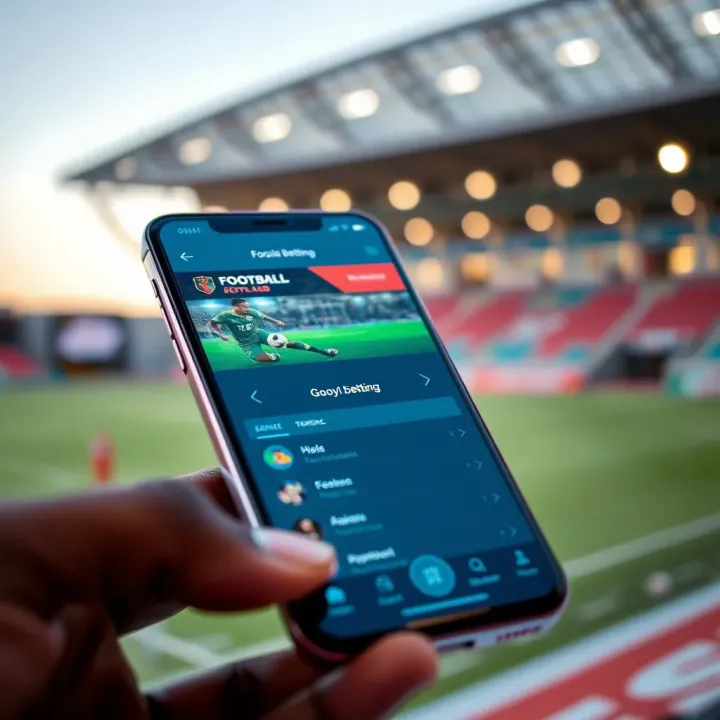
Football Betting in Nigeria: Trends and Regulations
⚽ Explore football betting in Nigeria with local platforms, legal updates, popular markets, safe payment methods, and practical tips for responsible wagering. ₦
Edited By
Michael Trent
Mathematical football prediction has become a key tool for many Nigerian bettors and sports enthusiasts who want better insights into match outcomes. Instead of guessing or relying solely on passion, these predictions use numbers and data to analyse patterns and forecast probable results. Whether you're studying the Nigerian Professional Football League (NPFL) or international fixtures, understanding the maths behind the game can improve your decision-making.
At its core, football prediction involves analysing historical match data like past scores, home and away records, player performance, and even weather conditions. Sophisticated models look for statistical trends that give clues on which team might win, draw, or lose. For example, a team that scores frequently within the first 30 minutes at home may have a higher chance of an early lead in future games.

Tools like regression analysis, Poisson distribution, and Elo ratings often power these predictions. Regression analysis helps identify how different variables affect match outcomes. Poisson distribution estimates the number of goals expected in a match based on averages, helping predict scorelines. Elo ratings assign strength values to teams that adjust dynamically according to game results.
Mathematical prediction isn’t about certainties but probabilities. It helps you understand what is more likely, not what will definitely happen.
For Nigerian fans, accessible platforms like Flashscore, SofaScore, and Bet9ja’s analytics sections offer practical data and simple stats to incorporate into betting strategies. Importantly, always combine these numbers with knowledge of team news, local conditions, and current form. Mathematical models sometimes fail to account for last-minute injuries, referee decisions, or player motivation.
A few practical tips to apply these methods effectively include:
Tracking a team’s recent goal-scoring and conceding patterns
Comparing home and away performance metrics
Considering player availability and lineup consistency
Factoring in head-to-head statistics between teams
By applying basic mathematical prediction techniques, Nigerian bettors can make more informed choices, reduce guesswork, and enjoy football betting with a clearer edge. However, responsible gambling and understanding the limits of data are always essential.
Next, we will explore the common methods and digital tools to sharpen these predictions further.
Grasping the basics of mathematical football prediction is vital for anyone interested in using numbers to forecast match outcomes. It helps bettors, analysts, and football enthusiasts make more informed decisions rather than relying on luck or guesswork. For instance, knowing how past match statistics influence future results allows you to spot patterns that a casual observer might miss.
Statistical data forms the backbone of football prediction. Numbers like goals scored, shots on target, possession percentages, and pass accuracy give an objective insight into team performance. If, say, a Nigerian Professional Football League (NPFL) team consistently dominates possession and creates more chances, statistical models can use this data to predict a higher likelihood of scoring.
These statistics don’t just inform who might win; they also help forecast exact scores or the number of goals expected. This is useful when placing bets on both match results and specific scores, making your prediction more precise.
Several factors shape match outcomes beyond basic statistics. Player form, injuries, weather conditions, referee tendencies, and even pitch quality in Nigerian stadiums like the Teslim Balogun Stadium can affect results. Including these variables improves prediction reliability.
For example, if a star striker is sidelined due to injury, models adjust expectations accordingly. Similarly, travel fatigue impacts visiting teams in Nigeria’s vast regions, which influences performance but is often overlooked without detailed variable analysis.
Football has an inherent unpredictability that even the best models cannot erase. Probability assigns chances to different outcomes but doesn’t guarantee results. A low-ranked team might upset a giant under certain conditions.
Using probability helps manage expectations; it reminds users that while statistical prediction increases chances of success, luck and chance mean risk remains. This balance is critical, especially when staking real money in betting.
At its simplest, football prediction uses basic statistics—averages, ratios, and trends. But modern approaches deploy complex algorithms that identify subtle patterns in data sets. Machine learning algorithms, for example, can learn from thousands of historical matches to improve ongoing predictions.
In Nigeria, tech startups sometimes combine algorithmic predictions with local insights to handle unique league characteristics, making such complex models practical.
Accurate data is the lifeline of prediction models. Reliable player stats, team performance over recent seasons, head-to-head records, and even situational data like home-away performance feed into these models.
For Nigerian football, gathering such data can be difficult due to inconsistent record-keeping, but major databases like CAF’s and some Nigerian sports analytics firms provide usable information. Supplementing with local observations helps fill gaps.
Certain events defy easy mathematical capture—sudden weather changes, refereeing errors, or emotional crowd impact. For instance, poor pitch conditions common in some Nigerian stadia can influence ball behaviour unpredictably, challenging models.
While quantitative methods try to adjust for these factors through probabilistic noise or scenario simulations, the human element remains a wild card. Recognising these limits is important to avoid overconfidence in predictions.
In essence, understanding mathematical football prediction equips you with a sharper edge to decode match outcomes, yet it calls for respect of football’s thrilling unpredictability.

Mathematical models and techniques form the backbone of football prediction, turning raw data into meaningful forecasts. For Nigerian bettors and analysts, understanding these models helps cut through guesswork and make decisions based on evidence. These tools have varying degrees of complexity and require different types of data, but all seek to quantify the uncertain dynamics of football matches.
The Poisson distribution is a classic model used to estimate the number of goals scored in a match. It assumes that goals happen independently and at a constant average rate. For example, if a team typically scores 1.5 goals per match, the Poisson model predicts the likelihood of them scoring exactly zero, one, two, or more goals. This approach is handy because it simplifies match outcomes into probabilities, helping bettors identify likely scorelines.
In practice, the Poisson model enables analysts to generate detailed score forecasts rather than vague win, lose, or draw odds. It can even highlight the chances of low-scoring games common in some Nigerian league matches, where defensive play may dominate.
Regression analysis links football outcomes to multiple influencing factors such as possession, shots on target, pass accuracy, or even player injuries. By examining historical data, regression models estimate how much each factor contributes to winning or scoring more goals.
For instance, a regression model might reveal that home advantage boosts the probability of winning by 15%, or that a missing key striker reduces goal chances. These insights help bettors adjust their predictions when team conditions change, making regression a flexible tool for more nuanced forecasts.
Recent trends in football prediction involve machine learning (ML) and artificial intelligence (AI), which explore complex patterns beyond simple statistics. These systems train on large datasets, including player movements, weather conditions, and past results, to find hidden signals influencing match outcomes.
In Nigeria, ML-powered platforms could improve predictions despite limited data by learning from international leagues then adapting those insights to local contexts. AI models can also update predictions in real-time, incorporating live match events—something traditional models struggle to do.
There's always a trade-off between model accuracy and complexity. Simple models like Poisson are easier to understand and apply but might miss subtle match dynamics. Complex AI models can be more accurate but often require specialised skills and computers to run.
For many Nigerian users, a clear model with decent accuracy works better than an overly complicated one that’s hard to interpret. Understanding the model’s assumptions and limits is crucial before relying on its output.
Models differ sharply by how much and what kind of data they need. Poisson needs mainly goal averages; regression demands detailed match statistics; AI requires massive and varied datasets.
In the Nigerian football context, data inconsistency is a real issue. League matches might lack thorough stats, so users should weigh data quality when choosing or building models. Sometimes local knowledge or expert judgement must complement incomplete datasets.
Football is never static—transfers, injuries, coaching changes, and league dynamics vary fast. Models need to adapt accordingly or risk becoming outdated. Regression models can incorporate new variables easily, while traditional Poisson models are less flexible.
AI methods excel in adaptability by learning from fresh data continuously. However, they depend heavily on real-time inputs, which can be challenging to obtain in Nigerian leagues. A hybrid approach, blending statistical models with timely expert updates, often offers the best practical solution.
Effective football prediction blends mathematical models with local conditions and human insight. Nigerian bettors and analysts should select approaches that suit their data availability, technical ability, and need for timely updates. Understanding the strengths and limits of each model is the stepping stone to smarter forecasting.
Practical tools and platforms are the backbone of modern football prediction. They turn raw data into accessible insights, helping bettors, analysts, and football enthusiasts make smarter calls. For Nigerian fans especially, having reliable tools that factor in local league specifics and player performance details adds real value beyond guesswork.
Many free and paid platforms serve different needs in football prediction. Free services often offer basic predictions based on historical data or simple algorithms—good for casual bettors or fans looking to understand trends. Paid subscriptions usually provide deeper analytics, real-time updates, and personalised recommendations, which can be worth the investment for serious punters.
Platforms process prediction data by collecting vast amounts of match information, from player stats to game outcomes. They then apply statistical models or machine learning techniques to estimate probabilities of different results. These forecasts get presented through easy-to-understand interfaces, such as odds displays, heat maps, or customised alerts, enabling users to quickly grasp key factors influencing the match.
For Nigerian football fans, platforms like BetKing or Bet9ja include local league data alongside international matches, offering tailored insights. International apps like SofaScore and FotMob also cover Nigerian competitions and provide live updates. These options reflect the growing availability of prediction tools specific to Nigerian contexts, which is crucial for accurate analysis and betting.
Creating a personalised prediction model starts simply with spreadsheets or basic software like Microsoft Excel or Google Sheets. You can input match data such as scores, player form, and venue results, then apply formulas to calculate averages or probabilities. This hands-on approach increases understanding of how statistical elements drive predictions.
Collecting match data locally involves tracking league fixtures, player performances, and even in-match conditions like weather or pitch quality. Organising this data in a structured way—by date, team, or competition—makes it easier to analyse trends. Many Nigerian football followers do this manually or use local databases if available, which can significantly improve the accuracy of homemade models.
Testing and refining predictions is crucial. After running your model, compare its forecasts to actual results and note where it performed well or missed. Tweaking input factors, adjusting weightings, or adding new data points can enhance reliability over time. This iterative process turns basic spreadsheets into effective forecasting tools tailored to your unique insights.
Effective football prediction combines solid data, the right tools, and continuous improvement. Whether using established platforms or developing your own model, the goal remains clear: make informed decisions rather than relying on chance.
By exploring practical tools and learning how to build your own models, you equip yourself with both ready-made solutions and the ability to customise predictions suited to Nigeria’s dynamic football scene.
Applying mathematical football prediction in Nigeria requires careful attention to local conditions that differ from European or American leagues. Nigerian football fans, analysts, and bettors can gain valuable insights by adapting prediction models to account for challenges unique to the Nigerian Professional Football League (NPFL) environment. This approach improves accuracy and relevance, helping enthusiasts make smarter decisions based on a combination of statistical data and context-specific knowledge.
Limited availability of consistent data remains one of the biggest obstacles for anyone interested in football prediction in Nigeria. Unlike top European leagues with meticulous record-keeping and live data feeds, Nigerian league statistics are often incomplete or inconsistent. Some clubs don’t communicate detailed player stats regularly, and official websites may lack up-to-date match reports. This gap makes it difficult to rely fully on quantitative methods like regression analysis or machine learning that demand large, consistent datasets.
Impact of local factors like pitch conditions and travel significantly influences match outcomes in Nigeria. Many NPFL stadiums vary drastically in pitch quality – some feature well-maintained grass, while others have patched or sandy grounds affecting ball movement. Added to that, teams often travel hundreds of kilometres under challenging road conditions just before a game, which can sap players’ energy. These elements are hard to quantify but have a tangible effect on match results, causing deviations from predictions based solely on player form or team ranking.
Role of informal insights alongside numeric data becomes crucial due to these limitations. Local analysts and bettors often tap into club insiders, social media updates, and even fan observations to complement sparse official numbers. For example, knowing that a key player is nursing a minor injury or that a team’s coach recently changed can shift prediction outcomes. Integrating such qualitative information with available stats leads to more balanced and realistic football forecasts for the Nigerian league.
Using predictions responsibly for betting and analysis is essential to minimise losses and promote fair play. Predictions should guide decisions, not guarantee outcomes. Nigerian bettors must avoid chasing losses or overly trusting even the best models, recognising the inherent uncertainties of football. Transparency from tipsters or prediction service providers about their methods and limitations fosters trust and informed choices.
Avoiding over-reliance on models is another critical point. Mathematical models can fail unexpectedly, especially when unexpected local events like player suspensions or pitch bans occur without being reflected in data sets. Relying solely on models without human judgement ignores the nuances of Nigerian football. Blending data-driven insights with experience and gut feeling is a balanced approach.
Encouraging transparency and critical thinking helps Nigerian football fans and analysts keep predictions honest and reliable. Openly sharing the variables used in models and acknowledging uncertainty prevents blind adherence to numbers. This mindset encourages asking ‘why’ and ‘how’ rather than accepting predictions at face value, raising the overall quality of analysis in Nigerian football circles.
Using mathematical predictions well in Nigeria means understanding the limits of data and applying common sense to local realities. A blend of numbers, observations, and ethics makes football forecasting meaningful and practical.
In summary, engaging with mathematical football prediction in Nigeria needs attention to data quality, local conditions like pitch and travel impacts, and judicious use of informal knowledge. Coupled with responsible ethical practices, these considerations make the tools and models truly valuable for Nigerian fans and bettors alike.
Technology keeps changing how football predictions get made, and more importantly for Nigerian fans, these developments open new ways to enjoy, engage, and even profit from games. Understanding future trends helps bettors, analysts, and businesses prepare for smarter predictions, more reliable data, and deeper insights.
Real-time data collection through wearables and tracking devices is transforming football prediction accuracy. Devices worn by players—such as GPS trackers and heart rate monitors—feed live data on speed, distance covered, and physical strain. This rapid data helps update predictions dynamically during matches, giving analysts a closer look at form and fatigue.
For Nigerian football, where in-depth player statistics have often been scarce, integrating these technologies can change the game. Imagine local teams using simple sensors to collect data during matches for predictive analytics; this could improve scouting and betting odds.
Artificial intelligence (AI) has improved drastically in handling complex datasets to offer live match predictions. AI systems learn from thousands of past matches and player behaviours, adjusting predictions as the match unfolds. This goes beyond static pre-match forecasts to provide ongoing insights.
For Nigerian enthusiasts, AI-driven platforms can bridge the gap of inconsistent data quality. By using machine learning, these systems can account for local factors like pitch quality or travel fatigue, improving prediction relevance. Plus, smarter bots can help bettors make timely stakes with data backing.
The rising demand for real-time, data-driven football insights presents a chance for Nigerian companies to innovate. Startups can develop homegrown AI solutions or prediction apps tailored to Nigeria’s leagues, creating jobs and generating revenue streams.
Local businesses could partner with sports data providers to supply actionable insights to broadcasters, betting firms, and coaches. This creates a vibrant ecosystem around football analytics, reducing reliance on foreign platforms.
Data-driven tools can make following football more exciting for Nigerian fans. Apps that offer live stats, predictive odds, and player performance ratings keep fans connected beyond just watching the game.
Moreover, integrating these insights into social media and broadcast commentary can deepen understanding and spark fresh conversations among supporters. This could raise the profile of Nigerian football domestically and internationally, encouraging more investments and sponsorships.
The future of football prediction lies in combining real-time data with intelligent algorithms—offering Nigerian fans not only better predictions but also richer, more engaging football experiences.
In short, these emerging trends represent opportunities for growth, smarter betting, and stronger Nigerian football ecosystems if stakeholders invest wisely and embrace technology early.
⚽ Explore football betting in Nigeria with local platforms, legal updates, popular markets, safe payment methods, and practical tips for responsible wagering. ₦

Learn how to start playing on SportyBet 🇳🇬: set up your account, deposit funds safely, bet on football ⚽ and other sports, read odds, and cash out your winnings easily 💰.
Discover the best alternatives to 1win for Nigerian bettors 🎲 Explore trusted platforms with great user experience, easy payments, and local appeal 🇳🇬 Ready to bet smart?

🎲 Learn 1win blackjack rules for Nigerian players, including card values, winning hands, betting tips, plus strategies to boost your game and master the online platform.
Based on 6 reviews